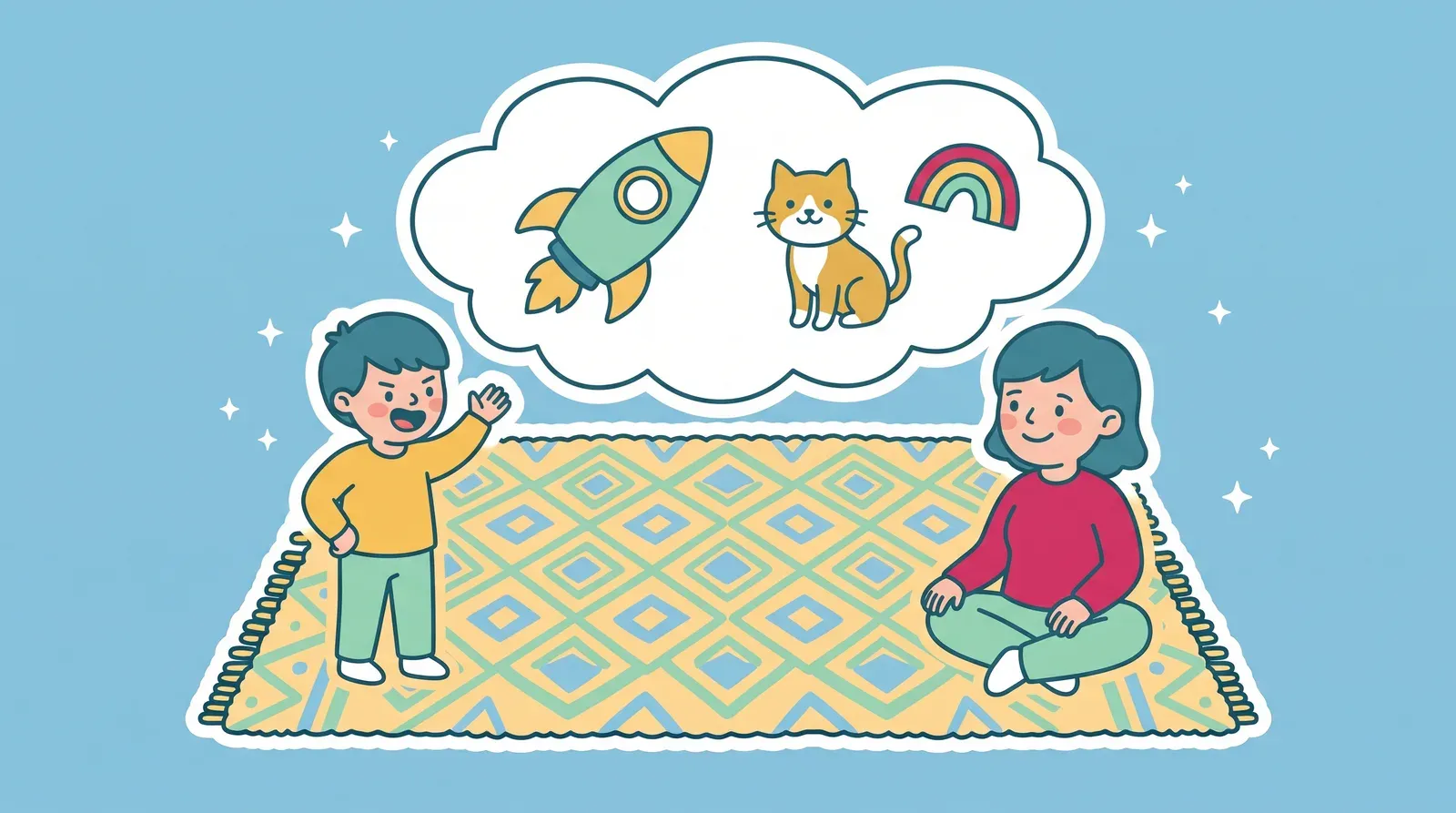
Children build English-speaking confidence in the moments when the language is lived as a game, not a lesson. Play removes the "what if I say it wrong" worry: the child speaks to win, to make someone laugh or to grab their turn — and every successful try banks courage for the next sentence.
Why does play work so well?
- In a game, language is a tool, not the goal; while attention is on the play, speaking comes by itself.
- There is no single right answer — the "what if I get it wrong" filter never switches on, so the courage to try grows.
- Children love routines and rituals: a game time with a name sticks easily.
- They already build stories in their first language — a skill that play carries over into English.
Set realistic goals
Expecting fluency from a beginner is both unnecessary and discouraging. Realistic, valuable starting goals look like this:
- Greetings and introductions ("Hello! My name is...")
- Vocabulary in concrete areas: colours, numbers, animals, food
- Two- or three-sentence mini narrations about a picture
- Answering familiar question patterns ("What is this?", "Do you like...?")
The "silent period" is normal
Most children meeting a new language listen first; single words come later, and sentences last. Pushing a child to speak doesn't shorten this phase — it stretches it. Your job is to keep the invitation open through play; children join in when they're ready.
Which games build confidence?
Anything concrete and physical: picture cards, command games, songs with repetition, pretend play, story completion. We collected eight concrete ideas with example phrases in our screen-free speaking games list.
A sample 10-minute daily routine
- 2 minutes warm-up: an English song or counting together.
- 5 minutes of play: picture talk or a card game — this is where the speaking happens.
- 3 minutes "sentence of the day": use today's one new pattern together three times.
What to avoid
- Memorisation lists and "how many words do we know" counters
- Writing and spelling pressure (that's school's job; home's job is speaking)
- Testing, and comparing with siblings or friends
- Making screens the only source of English — screens make children listen, not speak
- Correcting every mistake on the spot
How Talkie Box builds confidence
In Talkie Box, the easy question cards in every set are short, concrete and answerable straight from the picture, while the hard cards come into play as your child grows. The box grows with the child — the same deck works on day one and two years later.
Before you start, see how to set up the routine in our 7-step English-at-home guide, and take a look at the box here.

Bilge Karslı
English teacher, creator of Talkie Box